Garbage Time Glory Won't Save Your Ticket: The Hidden Cost of Backdoor Covers
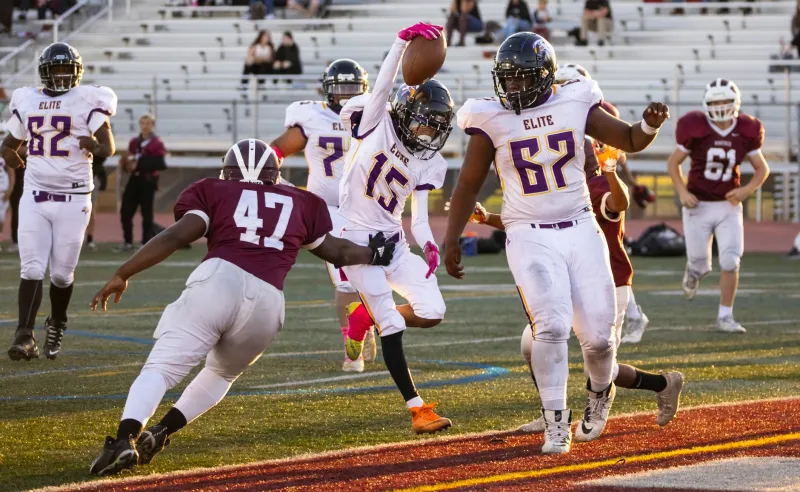
You've been there. Your team is down 31-10 with four minutes left. The game is cooked, everyone knows it, and the winning coach has already handed the headset to his offensive coordinator. Then the backup quarterback — the one who throws to the wrong jersey in practice — suddenly looks like Patrick Mahomes. Two quick scores. A two-point conversion. Your heart is hammering. You're one possession away from hitting that spread.
Then the clock hits zero and you're still short by a field goal.
Welcome to the backdoor cover trap. It's one of the most psychologically punishing experiences in sports betting, and for casual bettors, it's also one of the most expensive recurring mistakes in the book.
What Exactly Is a Backdoor Cover?
A backdoor cover happens when a losing team scores late in a game — typically in what's called garbage time — to cover the point spread without actually threatening to win. The team that dominated the game for 55 minutes still walks away with the victory. The losing team just happened to make the final score look a little more respectable.
In the betting world, this creates a split reality: the game's outcome was never in doubt, but the spread outcome flips at the last second. If you bet the favorite to cover a 14-point spread and the losing team scores twice in the final three minutes to cut the deficit to 7, you just lost a bet you thought you had locked up since halftime.
Flip the scenario around, and suddenly the losing team's bettors — who had mentally written off their tickets — are cashing out. That's the backdoor cover. And it happens far more often than most casual bettors realize.
Where Backdoor Covers Happen Most
Not all sports are equally vulnerable to this phenomenon. The structure of the game matters enormously.
College Football is the king of backdoor covers. The talent gap between top-25 programs and mid-major opponents is enormous, which means blowouts are routine. When Alabama is up 45-7 in the fourth quarter, the starters are on the bench, the defensive coordinator is running vanilla schemes, and the backup secondary is getting live reps. That's a recipe for garbage-time touchdowns. Sportsbooks know this, and so do sharp bettors.
NFL Football sees it too, especially in Week 17 and 18 when teams with nothing to play for are resting starters. A team locked into the third seed doesn't care about covering a 10-point spread. Their defense is going through the motions, and the opposing team's receivers are suddenly wide open.
NBA Basketball is arguably the most backdoor-cover-friendly sport of all. Coaches pull starters when a game is decided, and the combination of a short shot clock, frequent fouling, and high scoring rates means 15 points can evaporate in under two minutes. Casual bettors holding a big favorite ticket in the fourth quarter have been burned by this more times than they can count.
College Basketball has its moments too, particularly in lopsided conference matchups where the winning team is already celebrating before the final buzzer.
The Math Behind the Misery
Here's where it gets cold and clinical. Research into NFL spread outcomes consistently shows that roughly 30-35% of games that are decided by more than 17 points in the fourth quarter end with the losing team scoring at least one garbage-time touchdown. In college football, that number climbs closer to 40% when the margin exceeds 21 points with more than five minutes remaining.
Those aren't small numbers. They're not flukes. They're a structural feature of how football — and basketball — actually gets played when one team has already secured the win.
For the bettor holding the favorite at -17, that late score is catastrophic. For the bettor who took the underdog and the points at +17, it's a miracle. But here's the thing: sharp bettors aren't treating it like a miracle. They're treating it like a probability.
How Sharp Bettors Exploit This
Experienced bettors don't just stumble into backdoor covers — they actively hunt for spots where the conditions are ripe. A few of the patterns they look for:
- Motivational mismatches late in seasons. When a winning team has nothing to gain from running up the score, their defensive intensity drops. The losing team's starters are still fighting for contracts or pride.
- Live betting during blowouts. As a game becomes a blowout, live lines on the underdog spread can shift dramatically. A team that opened as a 7-point underdog might be available at +28 in the third quarter of a blowout. Sharps know the math on garbage-time scoring and will take those inflated numbers.
- Fading the chalk in NFL late-season games. Teams with playoff positioning secured have zero incentive to press. Betting the underdog plus the points in these scenarios has historically shown positive expected value over large sample sizes.
The Psychological Trap for Casual Bettors
Here's where casual bettors really get hurt: it's not just about the individual lost bet. It's about the emotional cycle that backdoor covers create.
When a backdoor cover almost happens — when the losing team scores twice but still falls short — bettors experience what psychologists call a near-miss effect. Your brain registers it as almost winning, even though mathematically it's identical to losing by 40. That near-miss feeling is addictive. It keeps you coming back, chasing the same scenario, convinced that next time the backdoor cover will fully materialize.
And sometimes it does. Which makes it worse.
The cycle looks like this: you bet a big favorite, the game becomes a blowout, you start sweating garbage time, the losing team scores once but not twice, you lose. Next week you see a similar matchup and think — this time I'll take the points with the underdog, because I've seen how this ends. You take the underdog. The favorite covers easily, no garbage-time heroics. You lose again.
You've let one unpredictable late-game sequence reshape your entire betting logic. That's the real cost of the backdoor cover trap.
What You Should Actually Do About It
First, accept that backdoor covers are a feature, not a bug. They're baked into the structure of these sports, and no amount of frustration will change that.
Second, stop making reactive adjustments based on individual outcomes. If you bet a -14 favorite and the underdog backdoor covered, that doesn't mean you should suddenly pivot to taking underdogs in blowout situations. Look at the full context — motivation, roster situations, scheduling — before you decide a pattern is exploitable.
Third, if you want to actively play garbage-time dynamics, do it through live betting with discipline. Set a specific threshold — a game must be X points out of reach with Y minutes remaining — before you'll consider taking the inflated underdog spread. And stick to it.
Finally, track your results in these spots. Most casual bettors who think they're good at reading garbage-time situations are actually just remembering the hits and forgetting the misses. The data will tell you the truth.
Garbage time is called garbage time for a reason. Don't let it trash your bankroll.