Free Money or Fool's Gold? How to Actually Calculate What a Sportsbook Bonus Is Worth
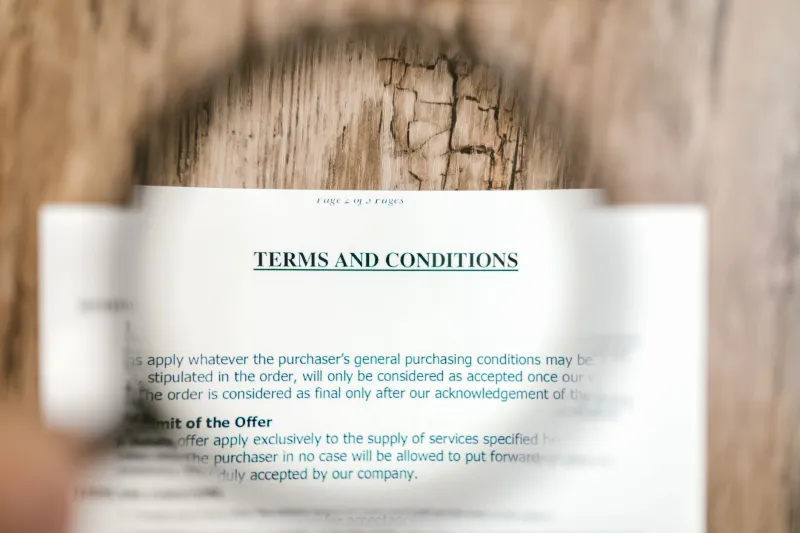
Every time a new sportsbook launches in your state, the ads hit hard. "Bet $5, Get $200 in Bonus Bets!" "First Deposit Match Up to $1,000!" "Loyalty Points That Never Expire!" It all sounds incredible — almost too incredible. And that's because, more often than not, it is.
That doesn't mean promotions are worthless. Some of them genuinely are exploitable, and sharp bettors treat bonus hunting as a legitimate edge. But the gap between a real opportunity and a cleverly designed illusion comes down to one thing: your ability to read the terms and run the actual math before you click "Claim."
Let's break it down.
The Welcome Bonus: Where the Hype Starts
Deposit match bonuses are the flashiest tool in a sportsbook's marketing arsenal. The pitch is simple — put in $500, and the book matches it, giving you $1,000 to play with. What's not to love?
The catch lives in the rollover requirement, sometimes called a playthrough requirement. This is the multiplier that tells you how many times you have to wager your bonus funds before you can withdraw anything. A 10x rollover on a $500 bonus means you need to place $5,000 in total bets before that money becomes real cash.
Here's where it gets painful. If you're betting at standard -110 odds (the typical juice on spread bets), the house edge on each wager sits around 4.5%. Run $5,000 through that grinder and you're statistically expected to lose roughly $225 just to clear the bonus. On a $500 bonus, that's a net expected value of around $275 — not bad, but nowhere near the $500 the headline promised.
Now imagine a 20x rollover. Suddenly you're churning $10,000 to clear a $500 bonus, with an expected loss of $450. You're essentially paying $450 for a $500 bonus. The math still works, barely, but one bad run and you're in the red before you ever see a payout.
Free Bets Aren't Free — They're Discounted
Free bet promotions are a different animal, and they're sneaky in their own way. When a sportsbook gives you a $100 free bet, most people assume that if they win, they pocket $100 in profit. Wrong.
Free bets are almost always "stake not returned." That means if you place a $100 free bet on a -110 line and win, you collect roughly $91 in winnings — but the $100 stake itself disappears. You don't get it back like you would with real money.
The practical value of a free bet is therefore a fraction of its face value. A rough industry rule of thumb: a free bet is worth about 70-80% of its listed amount when placed on near-even-money wagers. Bet it on a heavy favorite and that percentage drops fast. Bet it on a longshot and it could theoretically spike, but you're taking on variance risk to chase a theoretical edge.
The smart play with free bets is to target lines close to even money — think -110 to +100 — and avoid the temptation to "maximize" the bet by swinging for a big underdog. Steady and boring wins here.
Odds Minimums: The Hidden Filter
Bury this one in the terms and conditions, and most casual bettors never notice it. Odds minimums require that any bets used to satisfy a rollover must be placed at odds of, say, -200 or longer. That sounds reasonable until you realize it cuts off your safest, most reliable betting territory.
If you were planning to grind through your rollover with heavy favorites — the kind of bets sharp bettors sometimes use to control variance — an odds minimum blows that strategy up. You're forced into riskier territory, which is exactly what the book wants. More variance means more volatility, and volatility almost always favors the house over a large enough sample.
Always check for odds minimums before claiming anything. If a book requires bets at -150 or longer to count toward a rollover, factor that into your expected value calculation.
Loyalty Programs: Long Game or Slow Drain?
Reload bonuses and loyalty rewards are marketed as the book "giving back" to regular players. In reality, they're retention tools designed to keep you betting on that platform even when competitors might offer better lines.
Points-based loyalty programs typically return somewhere between 0.1% and 0.5% of your total wagered amount in real value. For recreational bettors placing a few hundred dollars a week, that's a few bucks a month — nice, but not a strategy. For high-volume bettors, it adds up, but those same players often have enough leverage to negotiate direct perks anyway.
The real loyalty program trap is the "use it or lose it" structure. Time-limited bonuses pressure you into betting on suboptimal markets just to avoid forfeiting the reward. If you're placing bets you wouldn't otherwise make just to clear a bonus, the bonus is costing you money, not making you any.
A Framework for Evaluating Any Offer
Before claiming a promotion, run through these four questions:
1. What's the rollover, and what does it cost to clear? Multiply the bonus amount by the rollover multiplier to get your required wagering volume. Then multiply that by the house edge (roughly 4.5% for standard spread bets at -110) to estimate your expected clearing cost.
2. Is this a cash bonus or a free bet? Cash bonuses with reasonable rollovers are generally more valuable. Free bets are worth roughly 70-80% of face value under ideal conditions.
3. Are there odds restrictions? Check for minimums that push you away from -200 and heavier. If they exist, adjust your expected value downward.
4. Does claiming this change how I'd naturally bet? If the answer is yes — if you'd be forcing bets on markets you don't have an edge in — the promotion is working against you, not for you.
The Bottom Line
Sportsbooks spend serious money on these promotions because, on average, they work out in the house's favor. That's not a conspiracy — it's just math and marketing doing what they're designed to do. But "on average" leaves room for players who do the homework.
At BetMy88, we're all about playing bold — but bold doesn't mean reckless. It means knowing exactly what you're walking into before you commit. The bettors who actually extract value from promotions aren't the ones dazzled by the headline number. They're the ones who flip to page two, read every line, and run the numbers before they ever click claim.
Treat every bonus like a bet. Know your edge, know your risk, and only pull the trigger when the expected value is actually in your corner.