Drawn Lines and Dead Zones: How State-by-State Betting Rules Are Quietly Reshaping Where the Sharp Money Goes
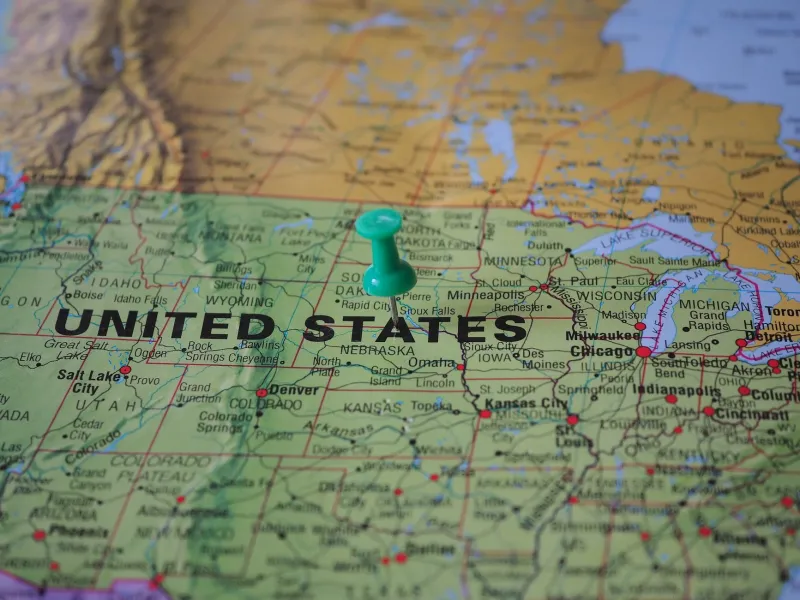
Imagine a casino where half the tables are open, half are closed, the rules change every few feet, and the best promotions are only available to people standing in a specific corner of the room. That's basically the current state of legal sports betting in America.
Since the Supreme Court's 2018 Murphy v. NCAA decision blew the door open on state-by-state legalization, the US has become the most fragmented regulated betting market in the world. Thirty-eight states and DC have some form of legal sports wagering as of 2025, but what that actually means varies enormously depending on where you're standing.
For casual bettors, this patchwork is mostly an inconvenience. For sharp bettors, it's an opportunity.
Why Every State Is Essentially a Different Market
The surface-level differences are obvious: some states have legal mobile betting, others require in-person registration, some allow only retail sportsbooks, and a few still have nothing at all. But the deeper differences are what matter to serious players.
Tax structures affect the books, which affects the lines. States with high operator tax rates — New York's 51% gross gaming revenue tax is the most extreme example — push sportsbooks to shade lines more aggressively and offer thinner promotions to protect margins. A -110 spread in New York might be -115 at the same book operating in a lower-tax state. That's not a conspiracy. It's math.
Promotional rules differ dramatically. New Jersey has historically allowed more aggressive sign-up bonuses and deposit matches than states like Massachusetts or Maryland, where regulators have imposed stricter limits on promotional advertising. A bettor who understands which newly-regulated markets are still in their promotional honeymoon phase can extract significant value from welcome offers and risk-free bet structures that simply don't exist in mature markets.
Available bet types aren't universal. Certain states restrict prop bets — particularly college sports props — either partially or entirely. Ohio, for instance, launched with college prop restrictions that other states didn't have. If your edge happens to live in player prop markets on college basketball, your effective market just got smaller depending on where you are.
The Border Play: How Bettors Navigate Geographic Restrictions
Here's something that surprises a lot of people: you don't have to be a resident of a state to bet there. You just have to be physically present within its borders when you place the bet.
This creates a legitimate, if inconvenient, arbitrage opportunity. Bettors in states without mobile betting — or with particularly unfavorable market conditions — sometimes cross state lines to access better books or better promotions. A bettor living in Georgia (no legal mobile sports betting) who drives regularly to Tennessee or North Carolina for other reasons might make a habit of loading up on bets while they're there.
More sophisticated players have mapped out which state combinations offer the most value. The Tennessee-Virginia corridor, the Pennsylvania-New Jersey overlap, the Illinois-Indiana border area — these geographic seams attract attention from bettors who've done the homework.
This isn't shady. It's legal. It's also the kind of thing that casual bettors never think about and sharp bettors never stop thinking about.
Newly-Regulated Markets: Where the Real Edge Lives Right Now
Every time a new state goes live with legal sports betting, there's a window — usually six to eighteen months — where the market conditions are uniquely favorable for sharp players.
Here's why: new market entrants are desperate for customers. That desperation translates into aggressive sign-up bonuses, inflated odds boosts, and promotional structures that haven't been dialed back yet by the compliance teams. The books are also still calibrating to local betting patterns, which means their opening lines are sometimes softer than they'll eventually become.
North Carolina's 2024 launch is a good recent example. Multiple major operators dropped into the market simultaneously, each competing aggressively for a user base that had been betting offshore or not at all. The promotional environment in those first few months was genuinely exceptional compared to mature markets like New Jersey or Colorado.
Savvy bettors treat new state launches like a limited-time sale. They get in, extract value from the promotional environment, and adjust their strategy as the market matures.
Bonus Stacking Across Jurisdictions: The Multi-State Playbook
For bettors who travel regularly or live near state lines, there's a more systematic approach worth understanding: multi-state account stacking.
Because books treat each state's operation semi-independently — often with separate app instances, separate bonus pools, and sometimes even different odds — a bettor with accounts in four or five states can potentially claim new-user promotions in each jurisdiction where they're physically present. The same national brand running operations in New Jersey, Pennsylvania, Michigan, and Colorado might technically offer four separate welcome bonuses.
The mechanics vary by operator and change frequently as companies update their terms. Some books have gotten better at identifying cross-state account duplication. But the opportunity exists, and bettors who pay attention to it have a meaningful edge over those who don't.
The Dead Zones: Where Sharp Money Won't Go
Not every state is worth a sharp bettor's attention, and some are actively worth avoiding.
New York is the most notable example. Despite being the highest-volume legal sports betting market in the country by handle, the combination of brutal operator tax rates and aggressive line shading makes it one of the worst markets for value. The books operating there are squeezed, and they squeeze the bettors in turn. Serious players who have options often route their action elsewhere.
States with limited book competition are similarly problematic. When only one or two operators have licenses in a given state, there's no competitive pressure to offer sharp lines or meaningful promotions. Monopoly or near-monopoly markets are almost always bad for bettors.
The Regulatory Chessboard Keeps Moving
The map isn't static. States that currently have no legal betting are watching tax revenue numbers from their neighbors with envy. States with restrictive frameworks are loosening them. The federal government periodically floats national frameworks that would standardize some of this — but that's been a slow-moving conversation.
What this means practically: the arbitrage opportunities available today won't all exist in three years. The bettors who are paying attention to regulatory developments — not just on their home turf but across the country — are the ones positioned to move quickly when a new market opens or an existing one changes its rules.
At BetMy88, we think the most interesting edges in modern US sports betting aren't just about picking winners. They're about understanding the market structure itself — and right now, that structure has more cracks in it than most bettors realize.