Stacked and Busted: The Brutal Math Behind Parlay Betting (And When It Actually Makes Sense)
There's a reason the sportsbook lobby practically glows when you open the parlay builder. Those giant jackpot numbers — $50 turns into $4,800, six legs, all winners — are doing exactly what they're designed to do: make your pulse quicken and your rational brain take a coffee break.
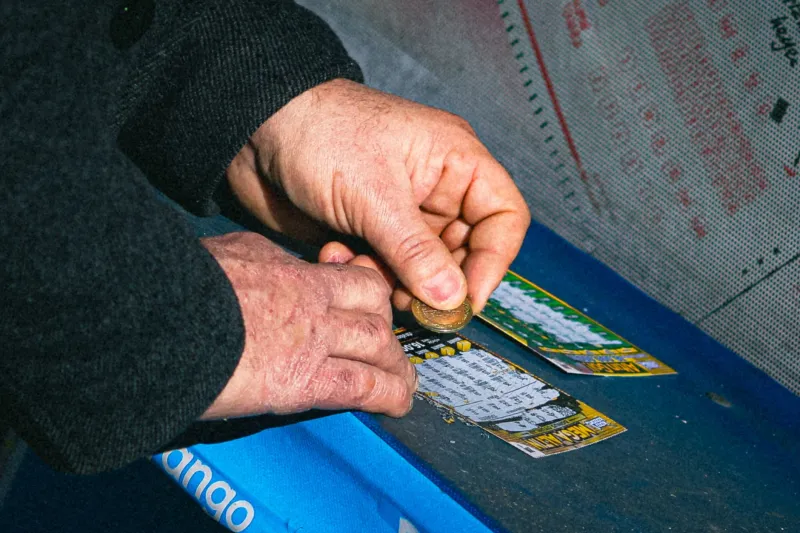
Parlays are the lottery tickets of sports betting. And just like the lottery, the people selling them are doing just fine.
That's not a reason to never touch them. But it is a reason to understand what you're actually buying before you start stacking legs like you're building a skyscraper.
What a Parlay Actually Is (And What It Costs You)
At its core, a parlay chains multiple individual bets together. Every leg has to win for the ticket to pay out. Miss one — one single game out of five — and the whole thing is worthless.
The appeal is obvious. A single -110 bet on a spread pays out just under double your money. String four of those together and suddenly you're looking at roughly 10-to-1 odds. That's real money from a relatively small stake.
Here's where the math gets uncomfortable. Four -110 bets combined should theoretically pay about 12.3-to-1 if the sportsbook passed along every dollar of value. Most books pay closer to 10-to-1 or 11-to-1. That gap — the difference between what you should get and what you actually get — is called the parlay tax, and it compounds with every leg you add.
On a two-leg parlay, the house edge is roughly in line with what you'd see on individual bets. By the time you're at five or six legs, you've handed the book a significant chunk of your expected value before the first kickoff.
Academic research on sportsbook data consistently shows that parlay bettors lose money at a higher rate than straight bettors. One analysis of major US sportsbook data found that parlays accounted for a disproportionate share of sportsbook revenue relative to their share of total wager volume. Translation: the books love parlay bettors.
The Psychology Doing the Heavy Lifting
Knowing the math doesn't kill the urge. That's because the pull toward parlays isn't really about math — it's about how the human brain processes possibility.
Behavioral economists call it probability neglect. When a potential reward is large enough, our brains essentially stop processing the actual likelihood of it happening. A 1-in-200 shot and a 1-in-2,000 shot feel almost identical emotionally, even though one is ten times more likely than the other.
Combine that with the near-miss effect — you went 4-for-5 on last Sunday's parlay and just know you were this close — and you've got a psychological feedback loop that keeps bettors coming back even as their bankroll trends the wrong direction.
There's also the narrative pull. A six-leg parlay isn't just a bet; it's a story. You're not just picking games, you're constructing a vision of Sunday afternoon where everything goes your way. That's genuinely enjoyable, and enjoyment has real value. Just be honest with yourself about whether you're betting for value or buying a fantasy.
When the Parlay Math Actually Works In Your Favor
Here's the part most anti-parlay takes leave out: there are situations where parlays make mathematical sense.
Correlated parlays, when they're available, are the clearest example. A correlated parlay links outcomes that are statistically connected — think betting on a team to win a high-scoring game and also betting the over on total points. If one outcome happens, the other becomes more likely. Some books restrict or ban these, but they represent genuine positive-EV opportunities when you can find them.
Same-game parlays (SGPs) have exploded in popularity across US sportsbooks, and while books price them carefully, sharp bettors have identified specific SGP combinations in certain sports — particularly NFL and NBA — where the correlation isn't fully baked into the odds. This requires real research and a solid grasp of game theory, but the edge exists.
Small-stake entertainment parlays occupy a different category entirely. If you're putting $10 on a six-teamer because it's fun and you've budgeted for it, that's a legitimate use of your gambling entertainment dollar. The mistake isn't playing parlays — it's playing them with money you can't afford to lose on a product you've convinced yourself is a reliable income source.
The Practical Framework: Parlay Discipline
If you're going to play parlays — and plenty of people will, because they're fun — here's how to do it without letting them wreck your bankroll.
Set a parlay budget separate from your main betting bankroll. Treat it like entertainment spending, not investment capital. A reasonable ceiling is somewhere around 5-10% of your total bankroll per week specifically for parlay action.
Cap your legs. The sweet spot for balancing payout and realistic probability is two to three legs. Beyond four, you're deep in lottery territory. The math doesn't lie.
Avoid adding legs just to boost the payout number. This is the most common trap. You've got two solid picks and the ticket pays 2.6-to-1. That feels boring, so you add a third game you're less confident in to get to 5-to-1. You just voluntarily made your bet worse.
Research SGP correlations before you build. Don't just click together whatever looks appealing in the parlay builder. Understand which outcomes in a given game are actually connected, and price that connection against what the book is offering.
Track your parlay results separately. Most bettors who claim parlays are profitable are working from selective memory. Keep a real record. The numbers will tell you the truth faster than your gut will.
The Bottom Line
Parlays aren't evil. They're a product, and like any product, they're worth buying under the right circumstances and a waste of money under the wrong ones. The sportsbooks have built an entire marketing apparatus around making you forget which situation you're in.
At BetMy88, we're big believers in playing bold — but bold doesn't mean reckless. It means knowing exactly what you're risking and why, then pulling the trigger with full information. Sometimes that's a well-researched two-leg SGP. Sometimes it's a straight bet on a line you've found real value in.
And sometimes, sure, it's a six-leg Sunday ticket you built for fun with ten bucks. Just call it what it is.