Lock It In: The Sharp Bettor's Guide to Hedging for Guaranteed Profit

Most bettors treat a winning ticket like a lottery scratch-off — you just hold on and hope. But the sharpest players in the game treat a winning position like a chess move: something to be leveraged, timed, and converted into cold, hard profit before the chaos of live sports has a chance to undo everything.
That's hedging. And done right, it's one of the most powerful tools in any serious bettor's arsenal.
What Hedging Actually Is (And Isn't)
At its core, hedging means placing a second bet — usually on the opposite outcome — to offset your exposure on an existing wager. It's the same principle your financial advisor uses when they tell you not to put all your eggs in one basket. The difference is you're doing it in real time, with live odds, and often with serious money on the line.
Hedging is not the same as being scared. That's a misconception that costs casual bettors a ton of value. A hedge is a calculated decision rooted in math, not nerves. When the numbers say locking in a guaranteed return beats riding out variance, you hedge. When they don't, you let it ride.
The confusion kicks in because a lot of people do hedge emotionally — they panic when a big parlay gets close to cashing and throw money at a counter-bet without running the actual numbers. That version of hedging is almost always a losing play.
The Classic Scenario: The Parlay That's Almost There
Here's a situation every serious bettor has been in. You put down $50 on a five-team parlay back on Sunday morning. It's now late in the fourth quarter of the final game, and your ticket is worth $800 if your team holds on. They're up by a field goal with four minutes left.
Do you hedge?
Let's do the math. If you bet $400 on the opposing team at roughly even odds, you're guaranteed at least $400 in profit no matter what happens. If your original team holds on, you net $400 from the parlay minus the $400 hedge. If they blow it, you net roughly $400 from the hedge bet. Either way, you walk away with four bills.
Alternatively, you could do nothing. If your team wins, you pocket $800 minus the original $50 stake — a $750 gain. But if they collapse, you get zero.
The decision comes down to one question: how confident are you in that lead holding? If you'd honestly bet your own money on the other team winning from that position, hedging makes sense. If you think the lead is iron-clad, letting it ride might be the higher-EV play. But here's what sharps understand that casuals don't — the value of a guaranteed $400 isn't just financial. It's psychological. Variance is real, and walking away a guaranteed winner keeps your bankroll and your mental game intact.
Futures Bets: The Hedge Bettor's Playground
If parlays are the entry point for hedging, futures markets are where the real artistry lives. This is where professional bettors — the ones who actually make money year over year — spend a lot of their time.
Say you put $100 on a team to win the Super Bowl back in August at +2000 odds. That's a potential $2,000 payday. Now it's January, and that team is in the Conference Championship game. Their odds to win the Super Bowl have dropped to +300 because they've been dominant all season.
At that point, you're sitting on a position that has enormous value. A sharp bettor doesn't just cross their fingers — they look at the current market and calculate what a hedge on the opposing remaining teams would cost versus what guaranteed profit they can lock in right now, before anything else can go wrong.
The key insight: the closer you get to a futures payout, the more the live market underprices your original ticket's real value. That gap is where professional hedgers make their money.
Timing the Hedge: Why Early Movers Win
One thing that separates sharp bettors from the weekend crowd is timing. Live odds move fast — sometimes within seconds of a significant in-game event. The bettor who identifies a hedge opportunity and executes it quickly captures the best available number. The one who waits until halftime to decide often finds the line has already moved against them.
This is especially true in basketball and football, where point swings can dramatically shift the math on a hedge in a matter of minutes. A sharp bettor watches the live market the same way a day trader watches a stock ticker — with discipline, a pre-set plan, and zero hesitation when the right number appears.
Some experienced bettors even build their hedging strategy before the original bet is placed. They identify the likely hedge scenarios upfront and know in advance at what odds or score differential they'll pull the trigger. That kind of pre-game planning is what separates systematic winners from reactive gamblers.
When Hedging Is Emotional Sabotage
Here's the hard truth: most casual hedges are just fear wearing a math costume.
If you're hedging a $20 three-team parlay because one game is making you nervous — and the potential return is $150 — the numbers almost never justify it. You'd be spending real money to protect a position that's still highly uncertain, reducing your expected value for the sake of comfort.
The rule of thumb? Hedge when you can lock in a meaningful guaranteed return relative to your original stake. Don't hedge just because watching the game is stressful. Stress is part of the deal. If you're hedging to sleep better, that's a bankroll management problem, not a strategy problem.
Also watch out for over-hedging — placing multiple counter-bets across different scenarios until you've sliced your potential profit so thin it barely covers your time. A hedge should simplify your position, not create a new web of exposure.
Casino Bets and Hedging: It's More Common Than You Think
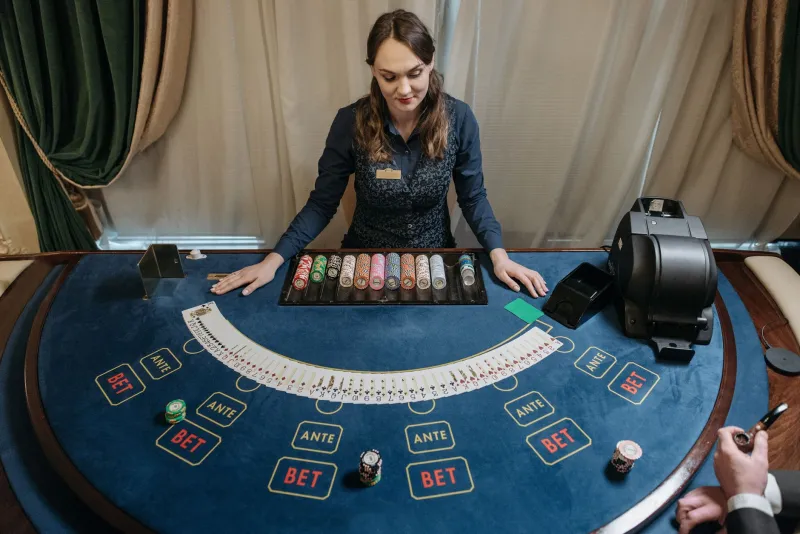
Hedging isn't exclusive to sports. In casino betting, certain table game strategies borrow heavily from hedging logic. In blackjack, insurance is technically a hedge against a dealer blackjack — though mathematically, it's usually a bad one. In craps, the "don't pass" combined with certain place bets creates a hedged position that reduces variance significantly.
The difference in casino hedging is that the house edge is baked in on both sides of most bets, which makes true guaranteed-profit hedging nearly impossible. Sports betting is where hedging really shines, because you're working with market-driven odds that can diverge enough to create real arbitrage-adjacent opportunities.
The Bottom Line
Hedging done right is one of the cleanest expressions of smart betting — it's disciplined, math-driven, and completely indifferent to the emotional pull of a big potential payout. The best bettors in the country don't just pick winners. They manage positions. They understand that a guaranteed profit today is worth more than a potential windfall tomorrow, especially when variance and bad beats are always lurking.
Next time you've got a live ticket building value, don't just ride it out on instinct. Run the numbers. Check the live market. Ask yourself what a guaranteed return looks like versus the risk of walking away with nothing. That's the hedge play — and it's how sharp bettors turn good positions into real money, every single time.